AI engineering team in Tokyo
Language models,
put to work.
MiraiTech is three engineers in Tokyo. Most of our projects are search, support and document tools built on large language models, along with the data pipelines and web apps they depend on. You work directly with the people who write the code.
Taking on new projectsReplies within one business day
Who would we be working with?
You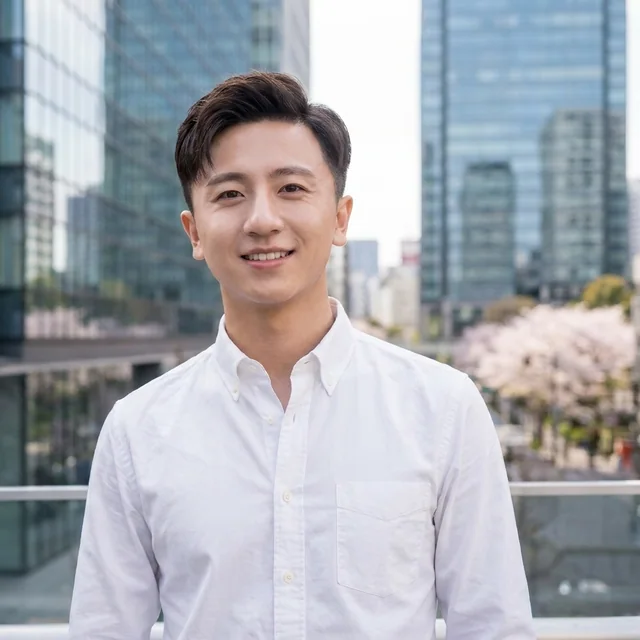

 Hiroshi · Kenta · Hiroki
The tools behind most of our projects.
- ClaudeModels
- OpenAIModels
- LangGraphAgents
- pgvectorRetrieval
- dbtData
- BigQueryData
- Next.jsProduct
- AWSCloud
What we do
Four kinds of work.
Search and answers over your documents
Retrieval over manuals, contracts, tickets and wikis, with citations people can check. We build the evaluation set first, so every change to retrieval or prompts gets a score.
pgvector · Hybrid search · Reranking · DeepEval
Agents and workflow automation
Assistants that read, decide and act inside the tools you already use: support inboxes, CRMs, calendars, code review. Anything risky waits for a person to approve it.
LangGraph · Tool calling · Claude · OpenAI
Data pipelines
Ingestion, cleaning and modeling, so the model reads current and correct data. This is usually the slowest part of a project and the one that decides how good the answers are.
Python · dbt · Airflow · BigQuery · PostgreSQL
Web applications
The product around the model: interfaces, APIs, sign-in, billing and the admin screens your staff will use every day.
Next.js · TypeScript · FastAPI · PostgreSQL
Recent work
Recent projects, all in production.
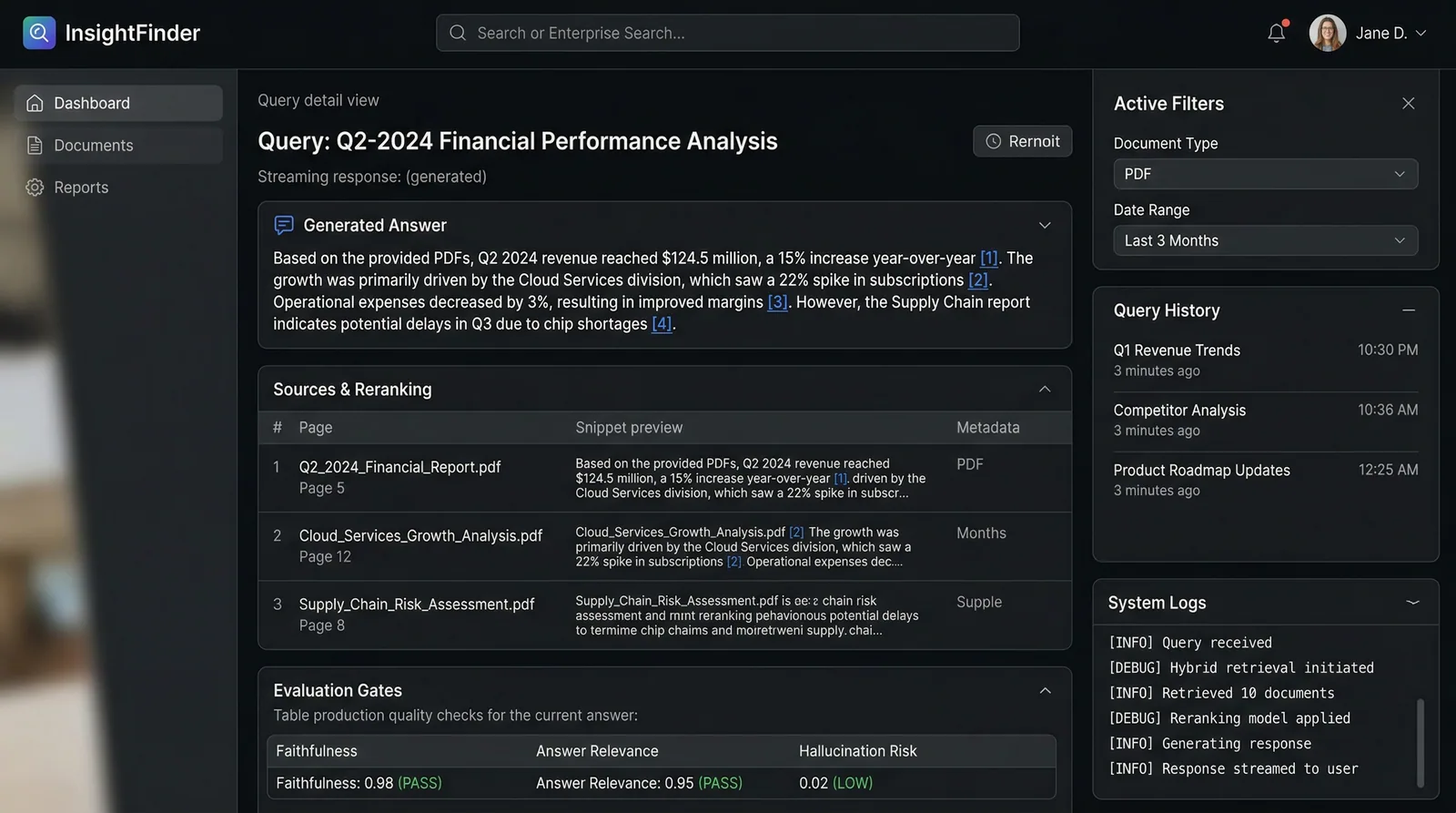
92% F1 score
Search over company documents
Answers questions from handbooks, wikis and PDF archives, with a citation for every claim. Hybrid retrieval and an evaluation gate in CI keep the quality from slipping.
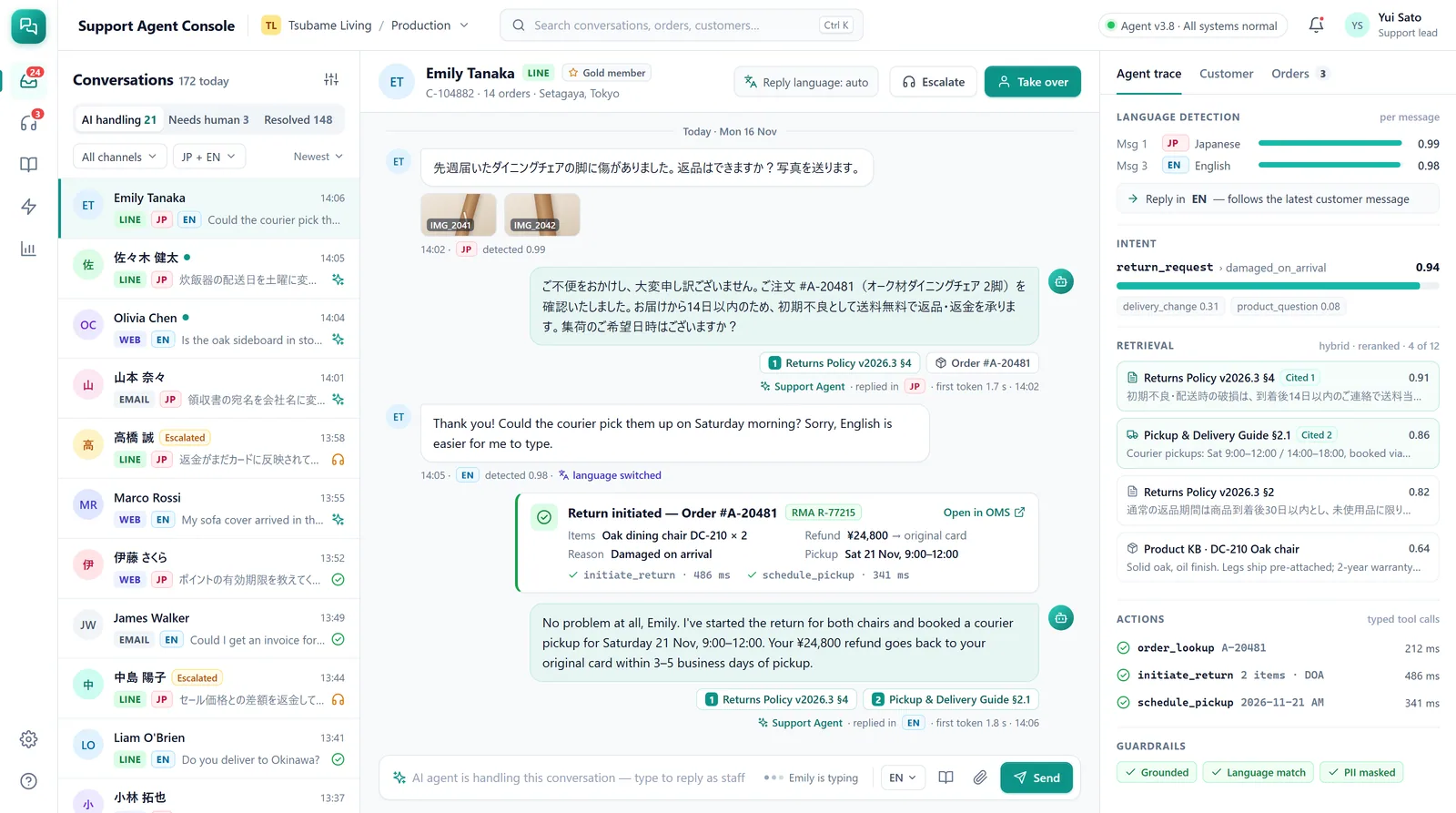
71% of tier-1 tickets resolved without staff
Bilingual support agent
A LINE and web chat agent for a Japanese retailer. It answers routine tickets in Japanese or English and passes the rest to staff with a short summary, so customers never repeat themselves.
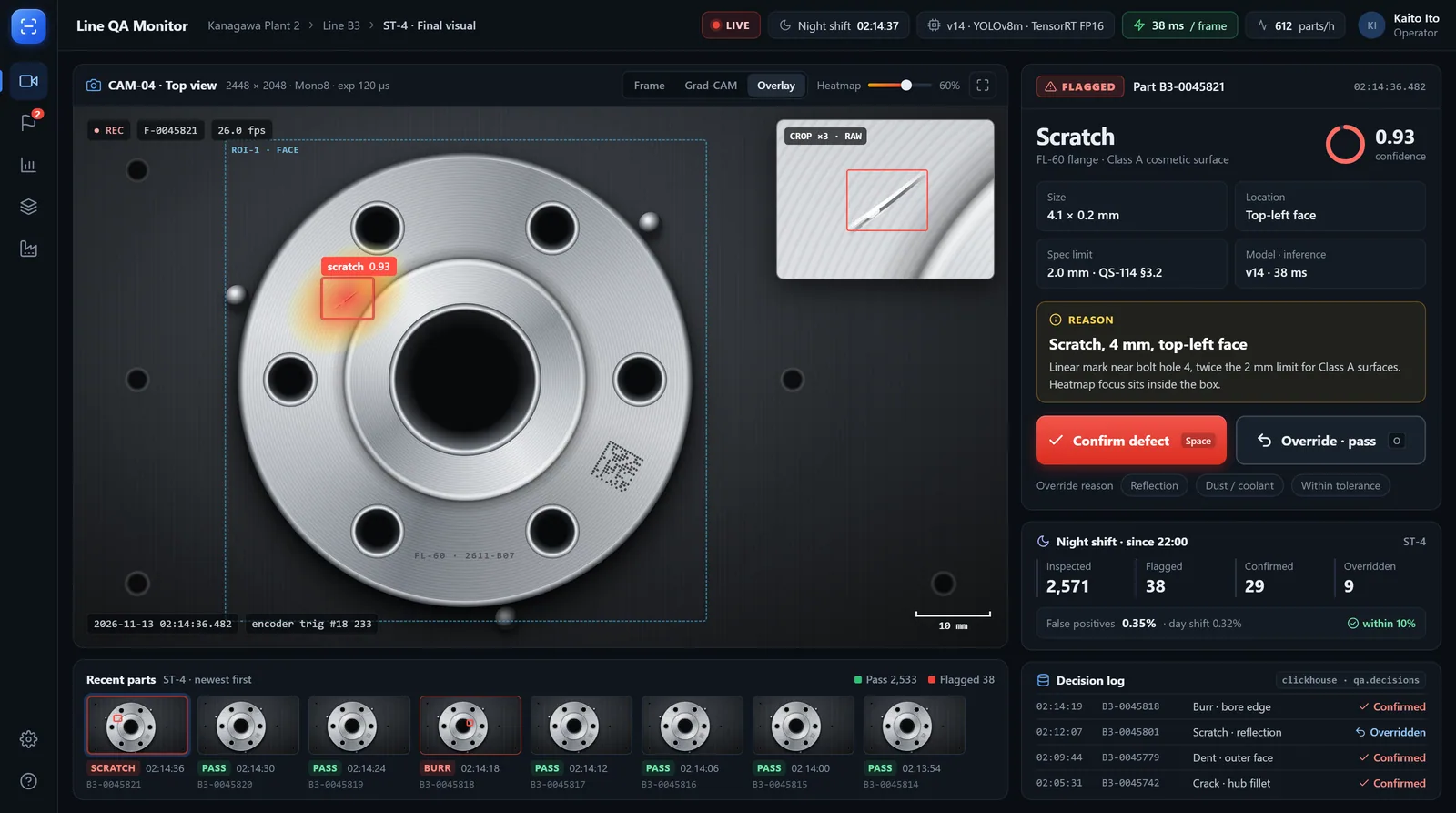
99.1% defect recall
Visual inspection on a factory line
Defect detection for a Japanese manufacturer. Inference runs at the edge in 38 ms per frame, and operators can see why each part was flagged.
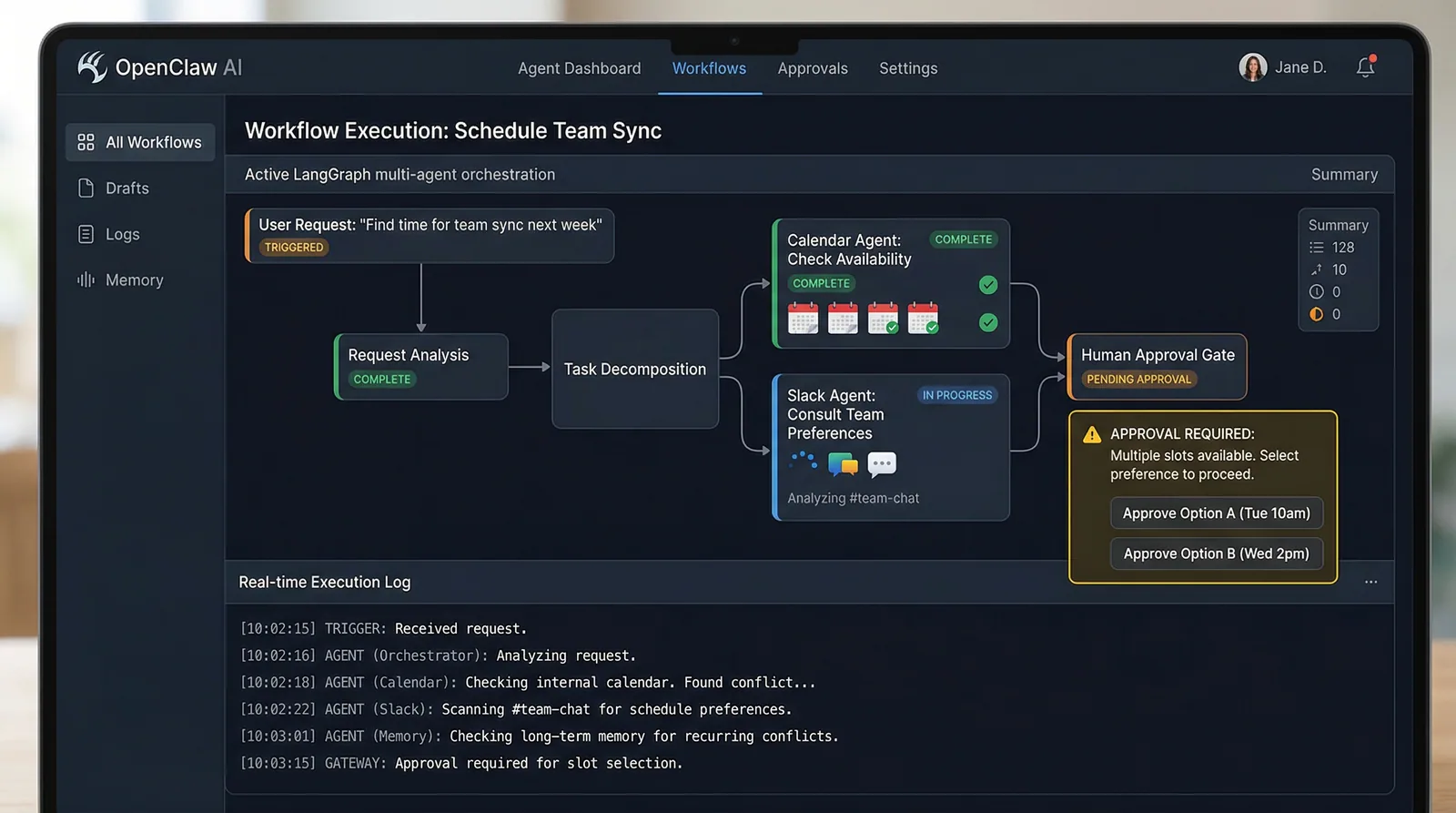
7 specialized sub-agents
Executive assistant agent
An assistant that works across Slack, Google Calendar, GitHub and email. People ask for things in plain language. It plans the steps and asks before doing anything risky.
How we work
The people you meet are the people who build it.
No account manager in between
You talk to the engineers
The engineer who discusses your requirements is the one who builds them. There is no account manager in between and no handover to a junior team.
- 日本語EN
Docs · Standups · Code review
Japanese or English
Documentation, standups and code review happen in whichever language your team prefers. Mixed teams get both.
- Deployed
- Monitored
- Handed over
Done means running in production
A project is finished when it is deployed, monitored and cleanly handed over. A good demo that never reaches real users does not count.
At a glance
- Case studies on this site, all in production
- 10projects
- Founded in Nakano, Tokyo
- 2022
- Tokyo time, now --:--
- JSTUTC+9
- Docs, standups and code review in either language
- JP/EN
The team
Who you will work with.
Hiroshi Kaji
Lead Engineer
Runs each project from scoping to launch and is the first person clients talk to.
Kenta Aizawa
GenAI & Backend Engineer
Builds the agent and backend layer, and looks after models once they are in production.
Hiroki Yumisashi
Data Engineer
Builds the pipelines and warehouses the models read from, and keeps the data clean.
Writing and research
Notes from the work.
Writing
All postsAI Lab
All experiments- LiveLocal LLM code reviewerCode review from models running on your own machine. No code is sent to an external API.
- LiveVoice-to-SQL agentAsk a database a question out loud and get back the query, the result and a short explanation.
- LiveRAG evaluation harnessA benchmark suite that compares chunking strategies, embedding models and retrieval methods on 12 metrics.
Questions
What people ask before they write.
Who does the work?
The three of us: Hiroshi Kaji, Kenta Aizawa and Hiroki Yumisashi. There is no account manager in between and no handover to a junior team. The engineer who discusses your requirements is one of the people building them.
What kinds of projects do you take on?
New products, AI added to an existing system, and longer partnerships. Most of our work is search, support and document tools on language models, with the data pipelines and web apps around them. If we are not the right team for the job, we will tell you.
What happens after launch?
A project is finished when it is deployed, monitored and handed over. We write down decisions, trade-offs and runbooks as we go, so your team can run the system without us.
Can we work in Japanese?
Yes. Documentation, standups and code review happen in whichever language your team prefers. Mixed teams get both.
How do you know the AI is working?
Every AI feature gets an evaluation set before it gets a prompt. Each change to retrieval or prompts gets a score, and a deploy that lowers it is blocked in CI.
How do we start?
Send an email with a few sentences about the problem, a rough timeline and any constraints, such as where the data has to stay. We reply within one business day.